













Charging LiFePO4 in winter: what is possible and what is not
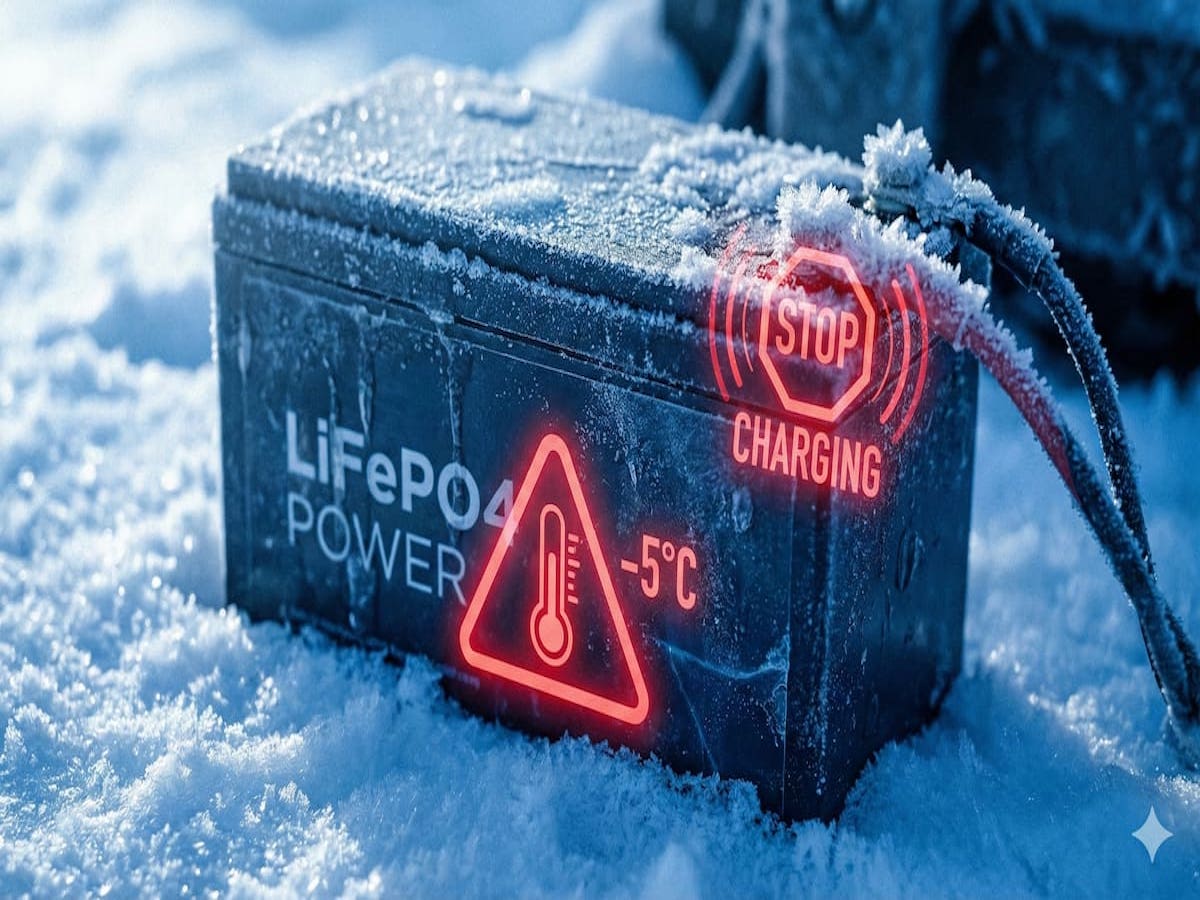
If it is frosty outside, and you have a lithium iron phosphate battery in your hands that has died, do not rush to turn on the charger. In the vast majority of cases, doing this is categorically not recommended.
There is only one situation when charging in the cold is permissible: when the battery is equipped with a built-in heating system. These are special low-current heaters that first raise the temperature inside the cells to positive values, and only then allow charging to begin. Without this, no.
And if the manufacturer allows it?
Some manufacturers write in the instructions that their LiFePO4 can be charged at -5°C or even -10°C. But this should be taken only as an emergency option - when there is simply no other way out. In everyday life or even in normal operation, it is better to act differently: bring the battery into a warm place and recharge its energy there.
Why is this better? Because in the cold, charging becomes incredibly slow. The safety system is forced to sharply limit the current. Here are the numbers:
- when the thermometer drops below zero, the charging current should not exceed 10% of the battery capacity. For example, for 80 A·h it is only 8 amperes.
- if the frost intensifies below -10°C, the current must be limited even more - to 5% of the capacity. The same 80-ampere battery will receive a maximum of 4 amperes.
Imagine how long it will take to charge. So, a simple rule: if you want it quickly and safely - charge LiFePO4 in the heat. And leave the frost for the ready-charged battery to work (many LiFePO4 discharge perfectly in the cold, but with charging it is really "a little more complicated").