














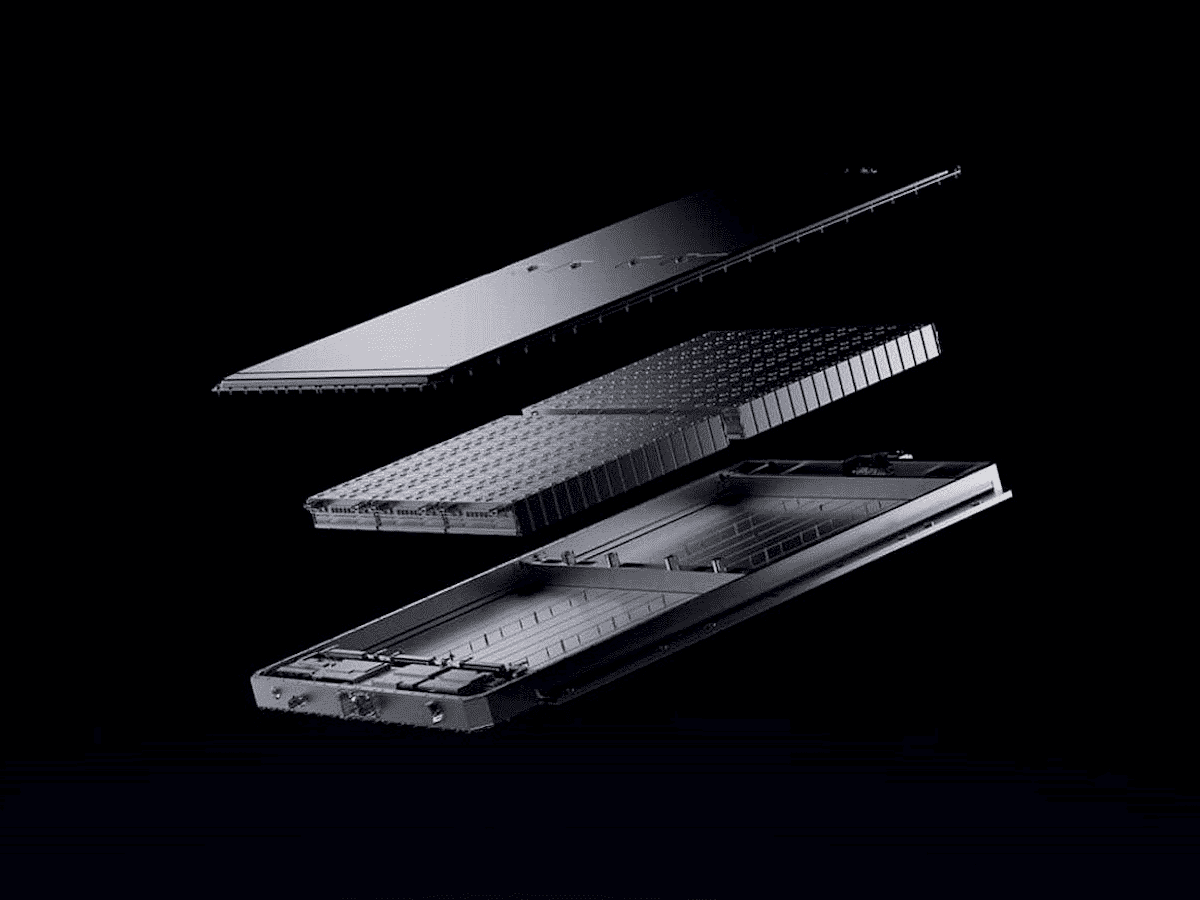
Progress in the development of traction batteries allowed to significantly increase the range of electric vehicles. However, the main barrier to the mass adoption of EVs remains the length of charging - this is what worries potential buyers the most.
CATL, deeply immersed in the very nature of electrochemical processes, continues to improve the materials, electrochemistry and architecture of battery systems. The result was a combination of ultra-fast charging, high energy consumption and uncompromising security.
- The Chinese giant claims that its new fast-charging battery can last 400 km after a 10-minute charge, and a full charge lasts more than 700 km. According to the company, this device opens the door to ultra-fast charging for electric vehicles.
CATL calls Shenxing the world's first LFP battery with 4C charging support. This was achieved thanks to a cathode with a superelectronic network structure and a fully nanocrystallized LFP material. Thus, the architecture facilitates the release of lithium ions and the instant response to charging signals.
The "high-speed ion ring" technology applied modifies the properties of the graphite surface, enlarging the channels for the introduction of lithium ions and shortening their penetration distance - actually creating a high-speed path for the current. In addition, a new layer of superconducting electrolyte reduces its viscosity, which increases conductivity.
- In addition to 4C charging, Shenxing demonstrates a long range on a single charge, the ability to charge quickly in a wide range of temperatures and a high level of safety. This is thanks to innovations in construction and the use of intelligent algorithms.
According to the company, at room temperature, the battery is recharged from 0 to 80% in 10 minutes. At the same time, CATL implemented system-level temperature control of individual cells, which allows them to be quickly heated to the optimal operating range. Thanks to this, even at minus 10°C, the battery can be charged from 0 to 80% in just six months, and the dynamics of acceleration from 0 to 100 km/year at low temperatures remains consistently high.